
If you’ve been hearing the term “crawl space encapsulation” from contractors or neighbors and aren’t quite sure what it means — you’re not alone. It sounds technical, but the concept is simple. And for many homeowners in Western Pennsylvania and Eastern Ohio, it’s one of the most important investments you can make in your home’s long-term health.
Here’s what you need to know.
What Is a Crawl Space, and Why Does It Matter?
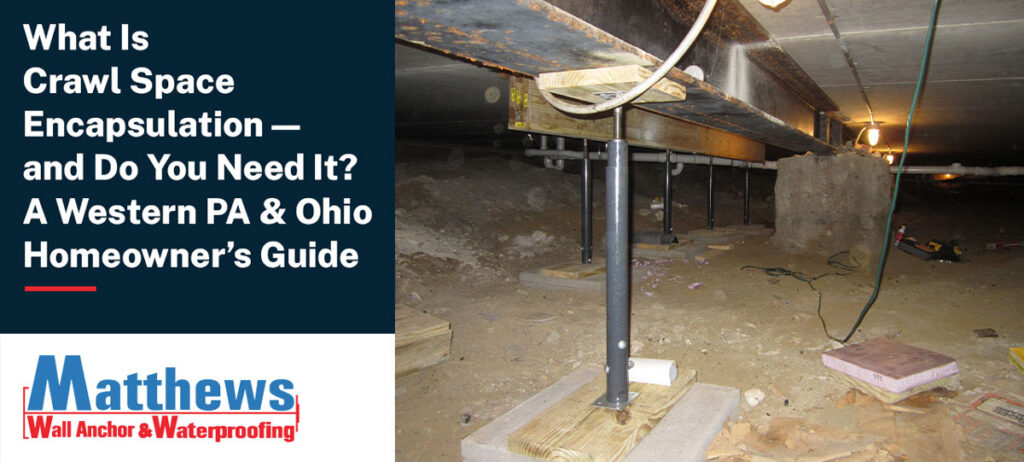
Your crawl space is the shallow, unfinished area beneath your home’s first floor — typically 1.5 to 3 feet tall. Most older homes in PA and OH were built with vented crawl spaces, meaning outside air flows freely in and out. That might sound harmless, but in our region’s humid summers and frigid winters, that open-air design creates a serious moisture problem.
Here’s the part most homeowners don’t realize: up to 50% of the air inside your home comes directly from your crawl space. That means whatever is down there — mold, mildew, humidity, musty odors, insects — eventually makes its way into the rooms where you and your family live, sleep, and breathe.
What Crawl Space Encapsulation Actually Is
Crawl space encapsulation is the process of sealing your crawl space off from outside moisture and air. At Matthews Wall Anchor & Waterproofing, we install a heavy-duty vapor barrier — a thick, puncture-resistant liner similar to a pool liner — that covers the floor and walls of your crawl space completely. Once the vapor barrier is in place, we seal any open vents and add a dehumidifier to regulate moisture levels inside the sealed space.
The result is a clean, dry, controlled environment under your home that protects everything above it.
What Happens When a Crawl Space Is Left Unprotected?
An untreated, damp crawl space does damage you can’t always see — until it’s become expensive:
- Mold and mildew growth — Mold thrives when humidity climbs above 50%, and most untreated crawl spaces in PA and OH regularly reach 70–80% humidity. Once mold takes hold in the wood joists beneath your floors, it spreads silently and fast.
- Wood rot and structural damage — Constant moisture attacks your floor joists and support beams, causing them to soften, sag, and eventually fail.
- Poor indoor air quality — Mold spores, allergens, and musty odors rise into your living space through gaps in the floor and ductwork. Family members with allergies or asthma are especially vulnerable.
- Higher energy bills — An unsealed crawl space lets conditioned air escape and outside temperatures in, forcing your HVAC system to work harder year-round.
- Pest infestations — Moist, dark crawl spaces attract insects and rodents, which then find their way up into your walls and living areas.
Signs You Might Need Crawl Space Encapsulation
You don’t have to crawl under your house to suspect a moisture problem. Watch for these warning signs:
- A persistent musty smell throughout your home, especially near floor vents or lower levels
- Squeaky or sagging floors above the crawl space
- Increased allergy symptoms or respiratory issues indoors
- Visible mold on baseboards or lower walls near the crawl space
- High energy bills without an obvious cause
- Condensation on ductwork or pipes in the lower level of your home
If you’re checking two or more of those boxes, it’s time for a professional crawl space inspection.
How Much Does Crawl Space Encapsulation Cost?
Project costs vary based on the size and current condition of your crawl space, but most homeowners invest between $3,000 and $8,000 for a complete encapsulation system. Some projects involving drainage improvements or significant mold remediation can run higher. On a per-square-foot basis, most full encapsulation systems run $3 to $7 per square foot for materials and labor.
That might sound like a significant investment — but consider the alternative. Mold remediation alone can cost $1,500 to $15,000 depending on how far it’s spread. Add in structural repairs from rotted floor joists, and that number climbs fast.
Encapsulation is preventative care. It protects your home’s structure, improves your indoor air quality, and — according to industry data — can help boost your home’s resale value because more and more buyers are asking specifically about crawl space conditions.
What the Process Looks Like at Matthews
When our team comes out to inspect and encapsulate your crawl space, here’s what you can expect:
- Free inspection — We assess your current moisture levels, check for existing mold or wood damage, and determine the full scope of the job
- Debris removal and prep — Any standing water, debris, or compromised insulation is removed before work begins
- Vapor barrier installation — We lay our heavy-duty liner across the entire floor and up the foundation walls, sealing every seam with heavy-duty tape
- Vent sealing — Open foundation vents are closed off to prevent outside humidity from re-entering the sealed space
- Dehumidification — A properly sized dehumidifier is installed to maintain healthy humidity levels in the now-sealed environment
The result is a crawl space you’ll never have to worry about again.
Ready to find out if your crawl space is putting your home at risk? Matthews Wall Anchor & Waterproofing offers free inspections throughout Western Pennsylvania and Eastern Ohio. Contact us today to schedule yours.