
If your basement or crawl space has ever had water in it — or you live in Western PA where heavy spring rains and snowmelt are just part of life — a sump pump isn’t optional. It’s essential. But knowing which type to install, when to replace the one you have, and why a backup system matters could mean the difference between a dry basement and a flooded one.
Here’s everything you need to know.
What a Sump Pump Actually Does
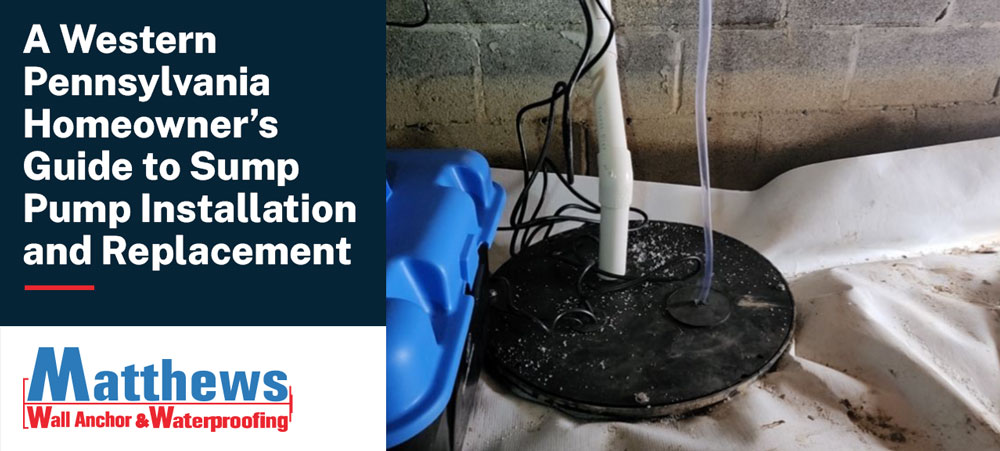
A sump pump sits in a small pit — called a sump basin or sump pit — dug into the lowest point of your basement floor. When groundwater builds up around your foundation from heavy rain or snowmelt, it naturally flows into that pit. The pump then activates automatically, pushes that water through a discharge pipe, and sends it safely away from your foundation.
Without a working sump pump, that water has nowhere to go except up — through cracks, through the floor, and into your basement.
The Two Main Types of Sump Pumps
When it’s time to install or replace your sump pump, you’ll have two primary options:
Submersible Sump Pumps
These pumps sit completely inside the sump pit, submerged in the water they pump out. They’re the modern standard for residential basements because they’re quieter, more powerful, and better equipped to handle debris and sediment. The motor is sealed inside a waterproof housing, which keeps it protected and out of sight. Submersible pumps are the preferred choice for basements that experience heavy water intrusion or frequent flooding.
Pedestal Sump Pumps
These have a motor mounted above the pit on a pedestal, with only the pump intake sitting in the water. Because the motor stays dry, pedestal pumps tend to last longer and are easier to service. They’re also a more budget-friendly option up front. The trade-off is that they’re more visible, slightly louder, and not as powerful as submersible models — meaning they may struggle to keep up during major storm events.
| Feature | Submersible | Pedestal |
|---|---|---|
| Motor location | Submerged in pit | Above pit on pedestal |
| Noise level | Quieter | Louder |
| Power/capacity | Higher | Lower |
| Lifespan | Shorter (shorter due to water exposure) | Longer |
| Upfront cost | Higher | Lower |
| Best for | Heavy water intrusion | Moderate water, easy access |
What Does Sump Pump Installation Cost in Pennsylvania?
For most Western PA homeowners, sump pump installation runs between $800 and $3,000, depending on whether it’s a replacement or a new installation, the type of pump selected, and accessibility. Submersible pump units themselves run $100 to $400, while pedestal units cost $60 to $170 — labor accounts for the majority of the total project cost.
In Pennsylvania specifically, submersible pump installations typically run $910 to $1,500 for the pump and labor combined. New installations requiring a new pit, liner, and discharge line will cost more than a straight pump replacement.
Don’t Skip the Battery Backup
Here’s something a lot of homeowners learn the hard way: the worst storms are the same storms that knock out your power. And a sump pump with no electricity is just an expensive piece of metal sitting in a pit while your basement fills with water.
A battery backup sump pump is a secondary pumping system with its own dedicated marine-grade battery. When your primary pump loses power, or simply can’t keep up with extreme rainfall, the backup activates automatically. Many systems also come with Wi-Fi monitoring and alarm features that alert you when the backup activates, so you always know what’s happening in your basement, even when you’re not home.
Flooding in a basement can cost $3,000 to $10,000 to remediate, not counting the loss of belongings. A battery backup system is a fraction of that cost and provides real peace of mind during every severe storm season.
Signs Your Current Sump Pump Needs to Be Replaced
If your home already has a sump pump, here are the warning signs that it may be reaching the end of its life:
- Strange noises — Rattling, grinding, or gurgling sounds during operation
- Constant running — The pump never seems to shut off, even when there’s been no recent rain
- Visible rust or corrosion on the pump or pit liner
- The pump is more than 7–10 years old — Even quality pumps have a finite lifespan
- You’ve had water in the basement despite the pump running — It may not be keeping up
- Frequent power outages during storms in your area — Time to add that battery backup
Pairing Your Sump Pump with a Full Waterproofing System
A sump pump works best as part of a complete interior waterproofing system. At Matthews Wall Anchor & Waterproofing, we often install sump pumps alongside interior drainage channels — like a WaterGuard system — that collect water from the perimeter of your basement floor and direct it to the sump pit efficiently. This integrated approach gives you the most complete protection against water intrusion throughout PA and OH seasons.
If your basement relies on a sump pump — or should have one — let’s talk. Matthews Wall Anchor & Waterproofing serves Western Pennsylvania and Eastern Ohio. Contact us today for a free inspection and honest recommendation.