
You walk past that crack in your living room wall every day. It’s been there for months, maybe longer. You tell yourself it’s nothing serious, just the house settling. But lately, you’ve noticed the front door sticks when you try to close it. And is that floor in the hallway actually sloping, or are you imagining things?
Foundation settling Pittsburgh homeowners experience is often gradual and easy to miss in the early stages. By the time the signs become obvious, the problem has usually been developing for years. The good news is that understanding what to look for and knowing when to take action can save you thousands of dollars and protect your most important investment.
Your home sits on a foundation that bears the weight of everything above it. When that foundation moves, even slightly, the effects ripple through your entire house. Pittsburgh’s unique combination of older housing stock, varied soil conditions, and freeze-thaw cycles creates specific challenges that make foundation settling a common concern for local homeowners.
Understanding Foundation Settling Pittsburgh: What Homeowners Need to Know
Foundation settling happens when the soil beneath your home compresses or shifts, causing your foundation to sink unevenly. This isn’t the same as the normal, uniform settling that occurs in the first few years after construction. We’re talking about differential settlement, where one part of your foundation drops more than another.
Think of it this way. Your foundation is like a table sitting on soft ground. If one leg sinks deeper than the others, the whole table tilts. That’s essentially what happens to your home during foundation settling Pittsburgh properties experience.
The process usually happens slowly over time. Soil compresses under the weight of your home. Water erodes soil particles and creates voids. Organic materials in the soil decompose and reduce volume. Clay soils expand when wet and shrink when dry, creating movement. All of these factors work together to create the conditions for settling.
Pittsburgh’s housing landscape makes this particularly relevant. Many of our homes were built decades ago, before modern foundation engineering standards existed. The foundation settling old homes Pittsburgh face is often related to construction methods from that era, combined with decades of soil changes and environmental stress.
Critical Settling Warning Signs Every Pittsburgh Homeowner Should Recognize
Recognizing settling warning signs early can save you thousands in repair costs. Your home will tell you when something’s wrong. You just need to know what to look for.
Cracks in Walls and Ceilings
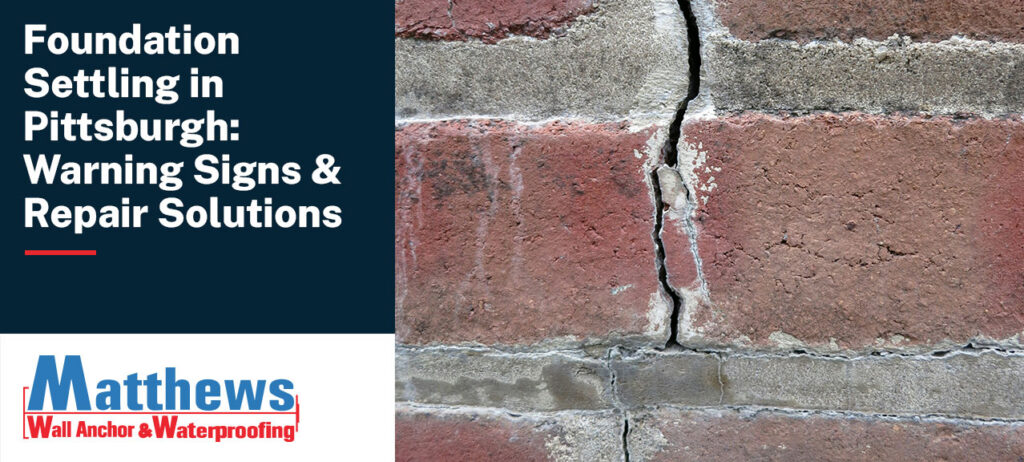
Interior wall cracks are often the first visible sign homeowners notice. Diagonal cracks that run from corners of doors or windows indicate differential settlement. Horizontal cracks in basement walls suggest serious pressure issues. Stair-step cracks in brick or block foundations show clear settling patterns.
Not every crack means disaster. Small hairline cracks are common and often cosmetic. But cracks wider than a quarter-inch, cracks that grow over time, or cracks that allow light or air through need professional attention.
Doors and Windows That Stick or Won’t Close
When your foundation settles unevenly, it throws door and window frames out of square. Doors that used to close easily now stick or won’t latch. Windows become difficult to open or close. Gaps appear between doors and frames even when closed.
This happens because the frame itself has shifted. The door or window hasn’t changed, but the opening it fits into has become distorted. If you’re experiencing this in multiple locations throughout your home, foundation movement is the likely cause.
Uneven or Sloping Floors
Place a marble on your floor. Does it roll? Floors that slope noticeably or feel bouncy when you walk on them indicate foundation problems. You might notice furniture that used to sit level now rocks or tilts.
Older Pittsburgh homes often have some floor irregularity, but progressive changes or slopes greater than an inch over 15 feet warrant investigation. These settling warning signs indicate your foundation needs professional attention.
Gaps and Separations
Look for gaps between walls and ceilings, or between walls and floors. Check where your walls meet the chimney. Examine the connection between your porch or deck and the main house. Separations in these areas show that different parts of your structure are moving at different rates.
Exterior signs matter too. Gaps between brick veneer and the house frame, or separation between addition walls and the original structure, reveal foundation movement.
Basement and Crawl Space Issues
Water intrusion in basements often accompanies foundation settling. Cracks in basement floors or walls allow water entry. Bowing or leaning basement walls indicate serious pressure from settling soil. Musty odors suggest moisture problems related to foundation issues.
Why Foundation Settling Happens in Pittsburgh
Understanding foundation settling Pittsburgh properties face helps you protect your investment. Our city’s unique characteristics create specific challenges for foundations.
Soil Conditions and Composition
Pittsburgh sits on varied soil types, from clay to sandy loam. Clay soils are particularly problematic because they expand when wet and shrink when dry. This constant movement creates stress on foundations. Areas with fill dirt, where soil was brought in to level building sites, are especially vulnerable to settling.
The region’s history of mining and industrial activity also affects soil stability in certain neighborhoods. Underground voids from old mines can cause sudden settlement, though this is less common in residential areas.
Climate and Weather Patterns
Our freeze-thaw cycles take a toll on foundations. Water in soil expands when it freezes, creating upward pressure. When it thaws, the soil contracts, sometimes leaving voids. This annual cycle gradually destabilizes the soil supporting your foundation.
Pittsburgh’s increasing rainfall, up 33% since 1840, means more water saturating soil around foundations. Poor drainage compounds this problem, keeping soil consistently wet and prone to erosion.
Age and Construction Methods
The foundation settling old homes Pittsburgh experience is often related to construction practices from decades past. Many older homes were built with stone foundations and minimal footings. These foundations lack the depth and reinforcement of modern construction.
Homes built before the 1950s often have foundations that don’t extend below the frost line. This makes them vulnerable to frost heave and settling. Original drainage systems may have deteriorated or become inadequate for today’s rainfall volumes.
Common Foundation Issues Pittsburgh Homeowners Face
Beyond settling, Pittsburgh properties experience related foundation problems. Basement moisture issues often accompany foundation movement. Cracks allow water entry, creating damp conditions that promote mold growth. Foundation Issues Pittsburgh homeowners face frequently involve both structural and moisture concerns.
Older neighborhoods with mature trees face root intrusion problems. Tree roots seeking moisture can grow under foundations, creating pressure and displacing soil. When large trees are removed, the soil that was held in place by roots can shift and settle.
Settling vs Heaving Foundation Pittsburgh: Understanding the Difference
The settling vs heaving foundation Pittsburgh distinction determines your repair approach. While settling involves downward movement, heaving is upward movement of the foundation.
Foundation Settling Characteristics
Settling creates downward and inward movement. Cracks typically run diagonally or vertically. Floors slope toward the settled area. Doors and windows stick because frames have dropped. Gaps appear at the top of walls or between walls and ceilings.
Foundation Heaving Characteristics
Heaving pushes the foundation upward. This usually happens from frost action or expansive clay soils. Cracks may be horizontal or show upward displacement. Floors slope away from the heaved area. Doors and windows stick because frames have been pushed up. Gaps appear at the bottom of walls or between floors and walls.
Understanding settling vs heaving foundation Pittsburgh differences helps identify the right repair. Settling requires support and stabilization from below. Heaving may require soil modification and pressure relief. Professional assessment determines which problem you’re facing.
Foundation Settlement Repair Pittsburgh: Professional Solutions That Work
Professional foundation settlement repair Pittsburgh services address the root cause, not just the symptoms. Modern repair methods provide permanent solutions that stabilize your home and prevent further damage.
Assessment and Engineering
Every repair starts with thorough assessment. Licensed professionals evaluate the extent of settlement, identify the cause, and determine the best repair approach. For significant repairs, engineered drawings ensure solutions meet structural requirements and building codes.
This assessment phase is critical. Without understanding why your foundation settled, repairs may fail to address the underlying problem. Professional Foundation Repair Pittsburgh experts use specialized equipment to measure settlement and evaluate soil conditions.
Foundation Pier Installation Pittsburgh: Modern Repair Technology
Foundation pier installation Pittsburgh professionals use advanced technology to stabilize homes. Pier systems transfer the weight of your home from unstable soil to deeper, more stable soil or bedrock.
Helical Pier Systems
Helical piers look like large screws that are mechanically driven into the ground. They work well in various soil conditions and can be installed with minimal disruption. The helical plates provide anchoring strength as they’re screwed into stable soil layers.
These systems are particularly effective for foundation settling old homes Pittsburgh face because they can be installed in tight spaces and don’t require heavy excavation equipment. Installation typically takes one to two days for an average home.
Push Pier Systems
Push piers are steel tubes driven into the ground using the weight of your home as resistance. They’re pushed down until they reach stable soil or bedrock, then hydraulically lift the foundation back toward its original position.
Push piers provide excellent load-bearing capacity and work well for heavier structures. They’re often the choice for commercial buildings or homes with significant settlement. Modern foundation pier installation Pittsburgh methods provide permanent solutions that come with transferable warranties.
Underpinning Solutions
Underpinning involves extending your foundation deeper into stable soil. This traditional method remains effective for certain situations, particularly when combined with modern materials and techniques. Concrete or steel supports are installed beneath the existing foundation to provide additional bearing capacity.
Wall Anchor Systems
When foundation walls bow or lean inward, wall anchor systems provide stabilization. Steel anchors are installed in stable soil away from the foundation and connected to wall plates inside. Tightening the system pulls the wall back toward its original position and prevents further movement.
When Foundation Repair Pittsburgh Services Become Necessary
Don’t ignore settling warning signs that appear in your home. Early intervention prevents minor issues from becoming major problems. But how do you know when it’s time to call professionals?
Immediate Attention Required
Some situations demand immediate professional assessment. Rapidly growing cracks, especially those wider than a quarter-inch, need evaluation. Doors or windows that suddenly won’t close indicate active movement. Visible foundation displacement or leaning walls pose safety risks.
Water intrusion in basements, particularly if it’s worsening, can accelerate foundation problems. Floors that have developed noticeable slopes or soft spots need investigation. Any situation where you question the structural integrity of your home warrants professional inspection.
Planned Assessment Recommended
Even without obvious problems, older homes benefit from periodic foundation inspections. If you’re planning to sell your home, addressing foundation issues proactively prevents complications during the sale process. Before major renovations, ensure your foundation can support additional loads.
If neighbors have experienced foundation problems, your home may face similar risks. Pittsburgh’s varied terrain means foundation issues often affect multiple properties in the same area.
Permits, Regulations, and Professional Requirements
Foundation settlement repair Pittsburgh work requires proper permits and regulatory compliance. Understanding these requirements protects you and ensures repairs meet safety standards.
Permit Requirements
Foundation repair in Pittsburgh is classified as structural work requiring building permits. According to city regulations, installations involving helical piers, push piers, wall anchors, or underpinning all require permits from the Department of Permits, Licenses, and Inspections.
The permit process ensures your repairs comply with the International Residential Code (IRC) and International Building Code (IBC), which establish baseline requirements for structural integrity and safety.
Cost Considerations
Permit fees in Pittsburgh are calculated at $6 per $1,000 of construction value, with a minimum fee of $130. For a typical foundation repair project valued at $25,000, the permit fee would be $150. While this adds to project costs, it ensures your work is inspected and approved, protecting your investment and facilitating future property sales.
Engineering Documentation
Complex foundation repairs often require engineered drawings, particularly for pier installations and extensive underpinning work. These engineered plans must demonstrate compliance with building codes and receive approval during the plan review phase.
Professional engineering provides liability protection and ensures repairs are properly designed for Pittsburgh’s specific soil conditions and building characteristics.
Inspection Requirements
Foundation repairs undergo multiple inspections throughout the project. These typically include pre-excavation inspection, foundation exposure inspection, pier or support installation inspection, backfill and drainage inspection, and final inspection.
Final approval from the inspection process is particularly crucial for real estate transactions, as incomplete or non-compliant foundation repairs can significantly impact property values and sale processes.
Emergency Stabilization
Pittsburgh recognizes that foundation failures can pose immediate safety risks. The city provides expedited permit processing for emergency stabilization work, allowing immediate action in cases of sudden foundation failure while maintaining regulatory oversight.
Why Professional Installation Matters
Foundation pier installation Pittsburgh services from licensed contractors ensure code compliance and lasting results. Professional installation provides several critical advantages over attempting DIY repairs or hiring unlicensed contractors.
Licensed professionals understand Pittsburgh’s specific soil conditions and building requirements. They carry proper insurance protecting you from liability. Their work is backed by warranties that transfer to future homeowners. They handle all permit applications and inspections, ensuring regulatory compliance.
Professional contractors use specialized equipment that ensures proper pier installation depth and load transfer. They can identify underlying problems that might not be obvious to untrained observers. Their experience with local conditions means they recommend solutions appropriate for Pittsburgh’s unique challenges.
Frequently Asked Questions About Foundation Settling
How much does foundation repair cost in Pittsburgh?
Foundation repair costs vary widely depending on the extent of damage and the repair method required. Minor crack repairs might cost a few hundred dollars, while comprehensive pier installation systems typically range from $5,000 to $15,000 or more. The investment protects your home’s value and prevents more expensive problems down the road. Professional assessment provides accurate cost estimates for your specific situation.
Can foundation settling be prevented?
While you can’t eliminate all risk, proper maintenance reduces foundation settling likelihood. Maintain consistent soil moisture around your foundation. Ensure gutters and downspouts direct water away from your home. Grade your yard so water flows away from the foundation. Address drainage problems promptly. Have your foundation inspected periodically, especially if you live in an older home.
Will my homeowners insurance cover foundation repair?
Standard homeowners insurance typically doesn’t cover foundation settling, as it’s considered a maintenance issue or result of normal wear. However, if settling results from a covered peril like a burst pipe or sudden ground collapse, you may have coverage. Review your policy and discuss specific situations with your insurance agent. Some policies offer optional foundation coverage for an additional premium.
How long does foundation repair take?
Most residential foundation pier installation projects take two to five days, depending on the number of piers needed and site accessibility. Weather can affect timelines, as some work can’t proceed in rain or frozen ground. Your contractor will provide a specific timeline after assessing your property. Emergency stabilization can often begin within days of your call.
Should I sell my house as-is or repair the foundation first?
Repairing foundation issues before selling typically provides better financial returns. Buyers are wary of foundation problems and will either walk away or demand significant price reductions. Professional repairs with transferable warranties actually become selling points. You’ll likely recoup most or all of your repair investment through a higher sale price and faster sale. Undisclosed foundation problems can lead to legal issues after closing.
What’s the difference between foundation cracks and settling?
Not all foundation cracks indicate settling. Small hairline cracks are common and often result from concrete curing. Settling causes specific crack patterns: diagonal cracks from corners, stair-step cracks in block or brick, or widening cracks that grow over time. Settling also produces other symptoms like sticking doors, sloping floors, and wall separations. Professional inspection determines whether cracks are cosmetic or indicate structural movement.
Protect Your Pittsburgh Home’s Foundation
Foundation settling Pittsburgh homeowners face is a serious concern, but it’s not a reason to panic. Understanding the warning signs of foundation settling Pittsburgh homes display helps you catch problems early. Knowing your repair options empowers you to make informed decisions. Working with licensed professionals ensures lasting solutions.
Your home is likely your largest investment. The foundation literally supports everything else. When foundation problems develop, addressing them promptly prevents minor issues from becoming major expenses. Modern foundation settlement repair Pittsburgh techniques provide permanent solutions that protect your home’s value and your family’s safety.
The foundation settling old homes Pittsburgh experience doesn’t mean those homes are beyond help. Professional foundation pier installation Pittsburgh services have successfully stabilized thousands of older homes, preserving their character while ensuring structural integrity. Whether your home was built last year or a century ago, effective repair solutions exist.
At Matthews Wall Anchor, we’ve helped Pittsburgh homeowners solve foundation problems for years. We understand the unique challenges our local soil conditions, climate, and older housing stock create. We’re straightforward about what you need and honest about what you don’t. No pressure sales. No gimmicks. Just proven solutions backed by solid warranties.
We know your home depends on a solid foundation. That’s why we stand by every job with craftsmanship you can count on. Our team handles everything from initial assessment through final inspection, ensuring your repairs meet all code requirements and provide lasting protection.
Don’t wait for foundation problems to get worse. Early intervention saves money and prevents additional damage to your home. If you’ve noticed any of the warning signs we’ve discussed, or if you simply want peace of mind about your foundation’s condition, contact our team today for a free, no-obligation inspection.
We’ll evaluate your specific situation, explain your options clearly, and recommend solutions that fit your needs and budget. Let’s get your foundation fixed right the first time.