
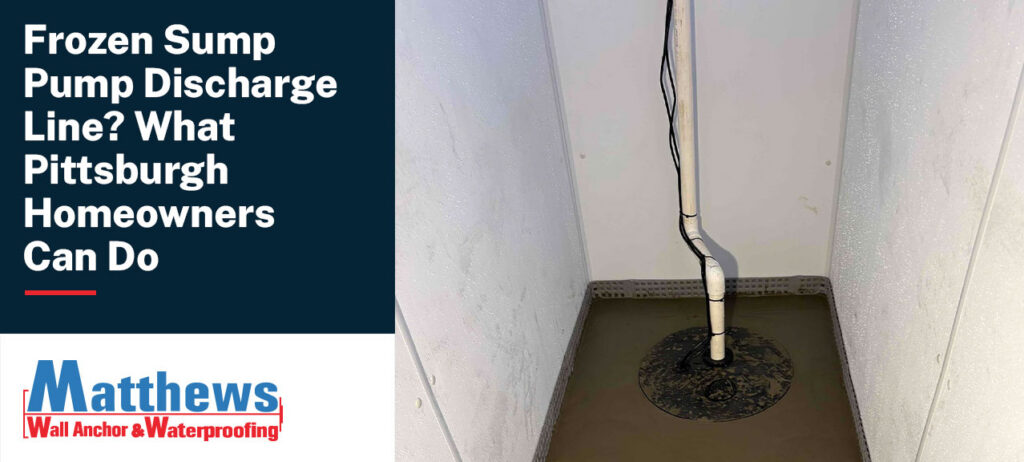
You wake up to another freezing Pittsburgh morning. The thermometer reads 15 degrees. You head to the basement to grab something from storage and hear it—your sump pump running continuously. The water level in the pit isn’t going down. Your heart sinks as you realize what’s happening.
A frozen sump pump discharge line is one of the biggest threats to your basement during Pittsburgh winters. When the discharge line plugs with ice, everything upstream stops working. The homeowner usually has no idea until water is already on the floor.
At Matthews Wall Anchor, we have seen this scenario play out hundreds of times across Western PA. The good news? Most frozen discharge line problems are preventable. In this guide, we’ll walk you through why lines freeze in our climate, what warning signs to watch for, and exactly what you can do to protect your home this winter.
Why Your Frozen Sump Pump Discharge Line Happens in Western PA
Understanding how a frozen sump pump discharge line develops helps you prevent the problem. The freezing process follows a predictable pattern.
The Freezing Mechanism
Sump pump discharge line freezing typically starts at the outlet where water is most exposed to cold air. The initial ice plug forms at this exit point, then grows backward toward your sump pump, creating a complete blockage.
The critical factor is standing water. A discharge line that doesn’t drain completely after each pump cycle retains water that gives ice a head start in the freezing process. This is why proper drainage matters more than anything else—a line that empties itself after every cycle has nothing left in it to freeze.
What Causes Lines to Freeze
Western Pennsylvania’s winter climate creates specific conditions that lead to frozen discharge lines:
Low spots and backward pitch. Lines with low spots or sections that pitch backward hold standing water instead of draining after each cycle. These water pockets freeze first and create the initial blockage.
Long exposed runs. Discharge pipes that run long distances above ground without insulation are highly vulnerable. The extended exposure to cold air allows heat to dissipate from the water inside the pipe.
Insufficient burial depth. Lines buried too shallow—above the local frost depth—can freeze within the soil itself. Western Pennsylvania’s frost depth requires careful consideration during installation.
Blocked exits. Snow accumulation or ice formation at the discharge outlet can block the opening. Water backs up in the line where it then freezes.
The One-Minute Rule
Your discharge line must be completely empty within one minute of the pump shutting off, and the outlet must stay open. This requires maintaining a continuous downhill slope throughout the entire discharge route, with no sags or low spots that could trap water.
Warning Signs of Sump Pump Discharge Line Freezing
Early detection prevents catastrophic basement flooding. Watch for these five critical warning signs during sump pump winter pittsburgh months:
1. Continuous Pump Operation Without Water Level Drop
A sump pump running in winter continuously without lowering water levels signals a problem. The pump tries to push water through a blocked discharge line. Your sump pump running in winter should cycle normally, not operate constantly. The pump may run much longer than usual or never seem to stop, even though it’s not effectively moving water.
2. Rising Water Levels Despite Pump Activity
If water levels in the sump pit keep rising while the pump is operating, the discharge line is obstructed. Water cannot exit the system. You may observe the water level staying high even though the pump is running.
3. Unusual Pump Noises
Humming sounds or prolonged operation noises indicate the pump is struggling against a blockage. While a pump pushing against a frozen or plugged discharge usually won’t burn up immediately, it can overheat. Prompt attention is essential.
4. No Water Flow from Discharge Pipe
When you discover a frozen sump pump discharge line, you’ll notice the pump is running but no water is being discharged outside. Check the outdoor end of the pipe—if it’s dry or capped with ice, there’s a blockage.
5. Visible Ice Accumulation
Ice forming around the discharge outlet is a direct indicator that the system isn’t functioning properly. This ice can block the opening and prevent water from exiting. Visible ice or snow at the outlet should trigger immediate investigation.
If your high water alarm sounds during winter, a frozen discharge line should be the first suspect. In severe cases, water may rise to the rim of the pit or begin spilling onto the basement floor—at this point, emergency action is required.
Essential Sump Pump Freeze Protection Strategies
Preventing sump pump discharge line freezing requires proper installation and proactive maintenance. Effective sump pump freeze protection starts with proper installation and drainage.
Proper Slope and Drainage
The most critical prevention measure is ensuring the discharge line slopes continuously downward from the pump to the outlet. This allows complete drainage after each pump cycle, leaving no standing water to freeze. Correct any low spots in the drainage route and maintain a continuous downhill slope throughout.
Burial Below Frost Depth
The main run of the discharge line should be buried below the local frost depth for Western Pennsylvania. This protects the pipe from freezing temperatures in the soil. Lines buried too shallow remain vulnerable to freezing even when underground.
Minimize Above-Ground Exposure
Keep the above-ground portion of the discharge line as short as possible. Long exposed runs are highly vulnerable during sump pump winter pittsburgh conditions and should be avoided.
Insulation for Exposed Sections
For sections that must remain exposed, insulation can slow heat loss from the discharge pipe. Options include heat tape or foam pipe insulation applied to vulnerable sections. However, insulation alone isn’t sufficient—proper drainage remains the primary defense.
Freeze Relief Fittings
Installing a freeze relief fitting provides an alternative outlet for water if the line becomes blocked. This device allows water to escape near the foundation if the downstream pipe freezes, preventing backup into the basement. These fittings provide a backup exit route when the main discharge line freezes.
Proper Discharge Line Extension Setup
A proper discharge line extension directs water at least 10-20 feet from your foundation. Your discharge line extension must maintain downhill slope throughout its entire length. This prevents water from pooling near the foundation where it could freeze and cause re-infiltration problems.
Outlet Maintenance
Keep the discharge outlet clear of snow and debris throughout winter. Regular checks to ensure the outlet is unobstructed are essential. Blocked exits cause water to back up and freeze in the line.
Pre-Winter Checklist
Complete these tasks before the first hard freeze:
- Confirm the pump operates correctly and cycles properly
- Clear all debris from the discharge outlet
- Inspect the discharge line for proper slope and drainage
- Check for and repair any sags or low spots in the line
- Seal visible foundation cracks
- Test the system under load conditions
- Verify that the line drains completely within one minute of pump shutoff
Battery Backup Sump Pump Pittsburgh Homeowners Should Consider
Power outages frequently occur during severe winter storms—exactly when sump pumps are needed most. A battery backup sump pump pittsburgh installation protects you during winter power outages.
Battery-Powered Backup Systems
Battery-powered backup pumps typically use 12-volt deep-cycle batteries with capacities ranging from 75Ah to 120Ah. These systems can provide several hours of continuous pumping during power outages and allow for intermittent pumping over several days.
High-capacity systems can pump over 11,500 gallons of water on a full charge, providing substantial protection during extended outages. Investing in a battery backup sump pump pittsburgh system prevents flooding when storms knock out electricity.
IceGuard® Discharge Line Protection
Specialized freeze protection devices like the IceGuard® system provide innovative solutions for Western Pennsylvania winters. This device features a grated adapter that allows water to escape if the underground pipe freezes, preventing backups into the basement.
Battery Maintenance
Test the battery monthly to ensure it holds a charge and activates automatically when needed. Replace batteries every 2-3 years regardless of apparent function to ensure reliability during critical times.
What to Do If Your Line Freezes
Safe DIY Thawing Methods
If a discharge line freezes in an accessible location, you can safely thaw it using:
- Electric heating pads applied to the frozen section
- Hair dryers directed at the frozen pipe
- Hot water poured over accessible frozen sections
Never use open flames to thaw frozen lines. This can cause pipe damage and safety hazards.
Temporary Emergency Measures
If a line is frozen and cannot be immediately thawed, you can temporarily disconnect the discharge line to allow water to discharge near the foundation until the line thaws. This prevents pump damage and basement flooding, though it’s only a short-term solution.
When to Call Professional Help
Professional intervention becomes necessary when:
- The frozen section is buried underground or otherwise inaccessible
- You’re unsure whether the problem is ice or mechanical failure
- You need to install freeze guards or IceGuard® systems
- The system requires modifications or upgrades
Professional services provide peace of mind and long-term protection, particularly for Pittsburgh homeowners facing recurring winter challenges.
Keep Your Sump Pump Running in Winter
Even during winter months, conduct monthly maintenance. Your sump pump freeze protection plan should include monthly winter checks.
Monthly Winter Checks:
- Test pump activation to ensure the system responds properly
- Monitor water levels in the sump pit during and after pump cycles
- Check discharge outlet for ice or snow accumulation
- Verify battery backup function if installed
- Maintain basement temperature above freezing
Groundwater continues to flow year-round, making winter testing just as important as summer maintenance.
During-Winter Monitoring:
- After each significant snowfall: Check and clear the discharge outlet
- During cold snaps: Monitor for warning signs of freezing
- After pump cycles: Verify water is actually discharging outside
- Weekly visual inspections: Look for ice formation at the outlet or around exposed pipe sections
Protect Your Home This Winter
A frozen sump pump discharge line doesn’t have to mean disaster for your basement. With proper prevention, regular monitoring, and quick action when problems arise, you can keep your home protected all winter long.
The process of sump pump discharge line freezing follows a predictable pattern you can interrupt. Start with the basics: ensure proper slope, bury lines below frost depth, keep outlets clear, and test your system monthly. These simple steps prevent most freezing problems before they start.
For more than 35 years, homeowners across Western PA have trusted Matthews Wall Anchor for foundation repair and waterproofing they can rely on. We understand the unique challenges Pittsburgh winters bring to your home’s foundation and drainage systems.
Need Help Protecting Your Basement?
If you’re concerned about your sump pump system or want to ensure it’s ready for winter, we’re here to help. Our team provides honest assessments, proven solutions, and the kind of service you’d expect from your hometown experts.
Start with a free, no-obligation inspection from one of our local experts. We’ll evaluate your discharge line setup, identify any vulnerabilities, and recommend solutions that make sense for your home and budget.
Professional sump pump freeze protection systems provide peace of mind during severe weather. Contact Matthews Wall Anchor today to schedule your inspection. We’ll get you out of the fix you’re in—or better yet, help you avoid it altogether.
Don’t wait until water is on your basement floor. Protect your home now with expert guidance from the local company built on trust.