
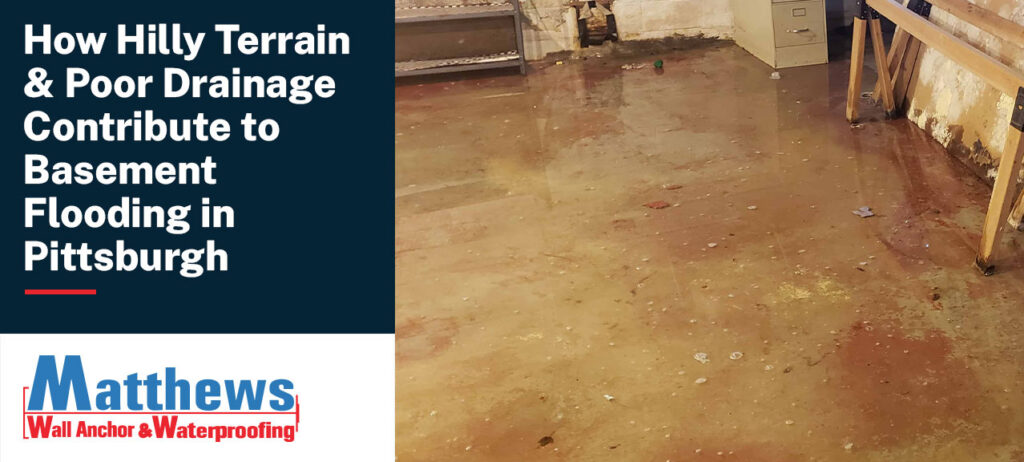
If you’ve ever walked down to your basement after a heavy rain and found water pooling on the floor, you know the sinking feeling that comes with it. Basement flooding is stressful, costly, and unfortunately common in Pittsburgh. What makes our city particularly vulnerable isn’t just bad luck — it’s the combination of our distinctive hilly terrain and drainage challenges that create the perfect conditions for water to find its way into your home.
Homeowners dealing with basement flooding Pittsburgh drainage issues face unique challenges due to the city’s geography. Pittsburgh’s rolling hills and increasing rainfall have turned basement flooding from an occasional nuisance into a serious concern affecting property values, health, and peace of mind. Understanding why this happens and what you can do about it is the first step toward protecting your home and family.
How Pittsburgh’s Hilly Terrain Creates Basement Water Problems
The connection between hilly terrain basement water Pittsburgh problems is clear when you look at how gravity directs runoff. Pittsburgh’s distinctive topography plays a fundamental role in basement flooding throughout the region. Our city’s hilly terrain creates natural water flow patterns that direct stormwater downhill, often overwhelming drainage systems and concentrating water in low-lying areas where many homes are situated.
Properties experiencing hilly terrain basement water Pittsburgh issues often sit at the bottom of slopes where water naturally collects. This geographic reality means that if your home is located at the base of a hill, you’re essentially positioned at a collection point for runoff from all the properties uphill from you. During heavy rainfall, the volume of water flowing toward your foundation can be substantial — far more than what falls directly on your property.
The challenge intensifies in neighborhoods built on Pittsburgh’s steeper slopes. Water doesn’t just trickle downhill — it rushes. This rapid movement of stormwater can erode soil around foundations, create hydrostatic pressure against basement walls, and find every crack or weak point in your home’s defenses. Even homes that remained dry for decades can suddenly develop flooding problems as soil settles, foundations age, and drainage systems deteriorate.
Poor Yard Drainage and Its Role in Basement Flooding
The link between poor yard drainage basement flooding is one of the most common causes we see in Pittsburgh homes. While terrain sets the stage, improper yard drainage often delivers the final blow that sends water into your basement. Many Pittsburgh properties have inadequate or improperly installed drainage systems that fail to redirect water away from foundations.
The relationship between surface grading and basement leaks becomes obvious when yards slope toward rather than away from foundations. Ideally, the ground around your home should slope away at a rate of about six inches over the first ten feet. This gentle grade directs water away from your foundation before it can seep through walls or accumulate around the base of your home. Unfortunately, many older Pittsburgh properties were built before modern grading standards, or the original grading has eroded over time.
Addressing poor yard drainage basement flooding requires a comprehensive approach to surface water management. Gutters and downspouts play a critical role — if they’re clogged, damaged, or discharge too close to your foundation, they’re actually concentrating roof runoff right where you don’t want it. We’ve seen homes where simply extending downspouts ten feet away from the foundation made a dramatic difference in basement moisture levels.
Surface water isn’t the only culprit. Correcting surface grading and basement leaks issues often provides the most cost-effective long-term solution, but it needs to be done right. Improper grading can create new problems, directing water toward neighboring properties or creating pooling areas that become breeding grounds for mosquitoes and other issues.
Understanding Basement Flooding Pittsburgh Drainage Challenges
Understanding basement flooding Pittsburgh drainage problems starts with recognizing how water moves through our hilly landscape and into homes. Pittsburgh has experienced a substantial increase in average annual rainfall, rising from approximately 30 inches per year in 1840 to around 40 inches today. That’s a 33% increase in precipitation over the past 180 years, placing unprecedented stress on drainage infrastructure that was designed for lower rainfall volumes.
What Pittsburgh Flooding 2024 Data Tells Us
The pittsburgh flooding 2024 events demonstrated how vulnerable many homes remain to extreme rainfall. The region has recorded its three wettest years on record within the last two decades, indicating that climate change is intensifying precipitation patterns and creating more frequent and severe flooding events. Data from pittsburgh flooding 2024 shows the increasing frequency of severe weather events that overwhelm both natural and engineered drainage systems.
These record-breaking rainfall events lead to basement flooding even in homes that previously remained dry. The infrastructure in many Pittsburgh neighborhoods simply wasn’t built to handle today’s rainfall volumes. Combined sewer systems, common in older parts of the city, become overwhelmed during heavy storms. Some homeowners experience pittsburgh bathtub flooding when sewer systems become overwhelmed during storms, causing sewage to back up through basement drains — creating not only flooding but serious sanitation hazards.
How Water Enters Pittsburgh Basements
Water finds its way into basements through several distinct pathways, each requiring different solutions. Water penetrates through cracks in foundation walls and floors, particularly in older homes where settling and deterioration have compromised structural integrity. These cracks might be barely visible on the surface, but they provide direct channels for water under pressure to enter your basement.
Foundation walls also allow water seepage through the concrete itself when hydrostatic pressure builds up in saturated soil. This pressure forces water through porous concrete, creating that characteristic damp feeling in basements even when there’s no obvious leak. The problem worsens over time as freeze-thaw cycles create additional cracks and deterioration.
Sewer backups represent another serious concern. During heavy rainfall events, combined sewer systems can become overwhelmed, causing sewage to back up into basement drains. This creates not only flooding but also serious sanitation hazards that require immediate professional attention and thorough cleanup.
The Health Risks You Need to Know
The cost of pittsburgh flood damage extends beyond property repairs to include health impacts from mold. Basements are closed, poorly ventilated spaces that retain moisture for extended periods, creating ideal conditions for mold growth and other health hazards.
A study conducted in Detroit provides quantifiable evidence of these health impacts that likely mirror what’s happening in Pittsburgh homes. Homes with recurrent flooding were 50% more likely to have visible mold growth. More concerning, residents living in these flood-prone homes were 42% more likely to experience breathing problems such as asthma.
These aren’t just statistics — they represent real families dealing with respiratory issues, allergies, and other health problems that stem directly from basement moisture and mold. An EPA-funded study currently underway in Pittsburgh’s Homewood and Hill District neighborhoods is examining the health effects of bacteria and mold in damp basement environments, which can exacerbate respiratory conditions and mental health issues.
Protecting Your Pittsburgh Home from Basement Flooding
Preventing basement flooding pittsburgh requires understanding both terrain and drainage system design. The good news is that effective solutions exist, and Pittsburgh homeowners have successfully implemented them across various neighborhoods. Let’s look at what works.
Sump Pump Installation Pittsburgh: Your First Line of Defense
Professional sump pump installation Pittsburgh services ensure your system works when you need it most. A sump pump actively removes water that collects in a basin installed at the lowest point of your basement. When water levels rise, the pump automatically activates and discharges water away from your foundation.
Proper sump pump installation Pittsburgh includes battery backup to protect your home during power outages — which often occur during the severe storms that cause flooding in the first place. We’ve seen too many homeowners discover their sump pump is useless when the power goes out at the worst possible moment. A battery backup system provides peace of mind and continued protection when you need it most.
Regular maintenance is essential. Sump pumps should be tested several times per year, and the discharge line should be checked to ensure it’s directing water far enough away from your foundation. A sump pump that discharges water right next to your foundation is just recycling the problem.
Interior Drainage System Pittsburgh Solutions That Work
An interior drainage system Pittsburgh solution collects water before it can damage your basement. Modern interior drainage system Pittsburgh installations work seamlessly with sump pumps to keep basements dry. These systems involve installing a perimeter drain along the inside of your basement walls, just above the footing.
Water that seeps through foundation walls is captured by this drainage channel before it can pool on your basement floor. The system directs water to your sump pump basin for removal. This approach is particularly effective for homes where exterior excavation isn’t practical or where hydrostatic pressure is the primary concern.
Interior drainage systems can be installed with minimal disruption to your property and don’t require extensive landscaping work. They’re code-compliant when installed by licensed professionals and provide reliable, long-term protection against basement flooding.
Surface Grading and Basement Leaks: The Connection
Correcting surface grading and basement leaks issues often provides the most cost-effective long-term solution. Proper grading ensures that water flows away from your foundation rather than toward it. This might involve adding soil to create the proper slope, installing swales to direct water around your property, or creating drainage channels that guide water to appropriate discharge points.
Gutter systems work hand-in-hand with proper grading. Clean, well-maintained gutters collect roof runoff and direct it through downspouts. Those downspouts should discharge at least ten feet away from your foundation — preferably into a drainage system that carries water completely away from your property. Gutter extensions are inexpensive and can make a significant difference in preventing basement flooding.
Green Infrastructure That Works
Pittsburgh homeowners have successfully implemented green infrastructure solutions that manage stormwater while adding value to their properties. A property in Beltzhoover implemented a comprehensive stormwater management system including a stormwater grate, drains, and a rain garden. The system captures and redirects runoff, significantly reducing the volume of stormwater that could potentially cause basement flooding.
Rain gardens are landscaped depressions that capture and absorb runoff. They’re designed with plants that tolerate both wet and dry conditions, creating an attractive feature that also serves a practical purpose. A duplex in Squirrel Hill showcases shared green infrastructure designed specifically for stormwater management, featuring permeable pavers, rain barrels, and a rain garden working together to reduce runoff.
Permeable pavers allow water to infiltrate through surfaces rather than running off. They’re durable enough for driveways and patios while significantly reducing the volume of water that flows toward your foundation or into storm sewers. These solutions not only protect your home but can also qualify you for stormwater fee credits from the Pittsburgh Water and Sewer Authority.
Allegheny County Drainage Requirements You Should Know
Professional installation matters not just for effectiveness but also for code compliance. Chapter 7 of the Allegheny County building codes establishes requirements for basement drainage systems. All occupied structures must have adequate drainage systems connected to public sewers where available.
The code mandates specific provisions to prevent backflow of sewage into buildings, which is essential for maintaining sanitary conditions in basements. Any plumbing repairs or installations related to drainage systems require a permit from the Allegheny County Health Department, ensuring that all work complies with established safety and sanitation standards.
Allegheny County’s wet weather regulations require that stormwater from roofs and paved areas be directed to public storm sewers when available. These regulations exist to protect public health and the environment, ensuring that all drainage systems are designed to handle wet weather conditions effectively.
Working with licensed professionals who understand these requirements ensures your drainage solutions are both effective and compliant. It also protects you from potential issues when selling your home, as unpermitted work can create complications during property transfers.
Frequently Asked Questions About Pittsburgh Basement Flooding
Why does my basement flood only during heavy rain?
Your basement likely floods during heavy rain because the volume of water overwhelms your property’s drainage capacity. Pittsburgh’s increasing rainfall — up 33% since 1840 — means storms now produce more water than older drainage systems were designed to handle. The combination of saturated soil, hydrostatic pressure, and inadequate drainage allows water to find its way through foundation cracks or overwhelm sump pumps.
Can I fix basement flooding problems myself?
Some preventive measures like cleaning gutters and extending downspouts can be DIY projects. However, professional assessment of basement flooding Pittsburgh drainage concerns can identify the specific issues affecting your property. Solutions like sump pump installation, interior drainage systems, and foundation repairs require professional expertise and permits to ensure they’re done correctly and comply with Allegheny County building codes.
How much does it cost to fix basement flooding in Pittsburgh?
Costs vary widely depending on the cause and solution. Simple fixes like gutter extensions might cost a few hundred dollars, while comprehensive solutions involving interior drainage systems and sump pumps typically range from several thousand to ten thousand dollars or more. The investment protects your home’s value and prevents the much higher costs of repeated flooding damage, mold remediation, and health issues.
Will homeowners insurance cover basement flooding?
Standard homeowners insurance typically doesn’t cover flooding from groundwater or surface water — the most common causes of basement flooding in Pittsburgh. You may need separate flood insurance, though coverage can be limited for basement contents. Prevention is more cost-effective than relying on insurance. Some policies cover sewer backup if you purchase that specific coverage.
What should I do immediately after my basement floods?
Safety comes first — don’t enter a flooded basement if there’s any chance of electrical hazards. Once it’s safe, document the damage with photos for insurance purposes. Remove water as quickly as possible to prevent mold growth. Contact professionals for water extraction, drying, and assessment of the flooding cause. Address the underlying drainage problem to prevent recurrence.
Take Action to Protect Your Pittsburgh Home
Pittsburgh’s unique combination of hilly terrain and increasing rainfall creates real challenges for homeowners, but effective solutions exist. Understanding basement flooding Pittsburgh drainage problems is the first step — taking action to address them protects your home, your health, and your investment.
The homes in Beltzhoover, Squirrel Hill, and other Pittsburgh neighborhoods that have successfully implemented proper drainage solutions prove that basement flooding can be prevented. Whether you need sump pump installation Pittsburgh services, an interior drainage system Pittsburgh solution, or comprehensive surface grading corrections, professional assessment and proper installation make all the difference.
Don’t wait for the next heavy rain to find out if your basement is vulnerable. The stress of dealing with water damage, the health risks from mold, and the cost of repeated flooding far exceed the investment in proper drainage solutions. Pittsburgh homeowners who take proactive steps to address drainage issues gain peace of mind knowing their homes are protected.
At Matthews Wall Anchor, we understand Pittsburgh’s unique basement flooding challenges because we’ve been helping local homeowners solve them for years. We’re straightforward, calm under pressure, and genuinely helpful — never pushy or overly salesy. We say what we mean and mean what we say.
Ready to protect your home from basement flooding? Contact our team today for a professional assessment. We’ll evaluate your specific situation, explain your options clearly, and recommend solutions that fit your needs and budget. Let’s get your basement flooding problem fixed right the first time.